The University of Iowa Libraries
Special Collections and University Archives

Finding Aid
|
Papers of Philip Greeley Clapp Access and Restrictions: This collection is open for research. Digital Surrogates: Except where indicated, this document describes but does not reproduce the actual text, images and objects which make up this collection. Materials are available only in the Special Collections Department. Copyright: Please read The University of Iowa Libraries' statement on Property Rights, Copyright Law, and Permissions to Use Unpublished Materials. Use of Collections: The University of Iowa Libraries supports access to the materials, published and unpublished, in its collections. Nonetheless, access to some items may be restricted by their fragile condition or by contractual agreement with donors, and it may not be possible at all times to provide appropriate machinery for reading, viewing or accessing non-paper-based materials. Please read our Use of Manuscripts Statement. Acquisition and Processing Information: These materials were transferred to the University Archives from the University of Iowa Music Library in May 1994. Guide created by Denise Anderson, June 2007. Additional oversize box contents notes provided by Amy McBeth, 2010. |
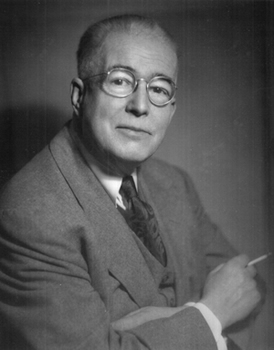
Philip Greeley Clapp, not dated |
Scope and Contents
This collection contains material relating to the professional career of Professor Philip Greeley Clapp, a composer, conductor of symphony orchestras, accomplished pianist, and music instructor. Some Greeley and Clapp genealogy is included in boxes 1 and 6, as well as some documentation of Mr. Clapp's studies at Harvard in box 12.
Four scrapbooks of carefully dated newspaper articles are housed in box 12. Mr. Clapp and his father, Henry Lincoln Clapp, authored many of the articles, while others announce their accomplishments. Henry Clapp was principal of Putnam Elementary School in Connecticut during the 1800s, and his theories of elementary education were highly-regarded. Articles dated 1879 to 1918 by the senior Clapp on the topic of education, and his hobby of horticulture in the Boston area, are preserved here.
Correspondence in box 6 is primarily with SUI faculty and administrators. Correspondence in box 7 is primarily with administration, yet includes includes more correspondents, who are listed on the folders.
Boxes 15 and 16 hold plaster casts of the faces and hands of adults and a child, yet it is not recorded of whom they were made.
Oversize boxes 1 through 20 contain original scores and drafts of compositions, including annotations. Several audio recordings of Mr. Clapp's performances are included in one oversize box.
Biographical Note
Philip Greeley Clapp was born in Boston on August 4, 1888. His mother, Florence Greeley Clapp, and his aunt, Mary Greeley James, were his first music teachers of piano. At age 11 he began to study composition under the dean of the Boston University Music Department, John P. Marshall. He continued his education at Harvard, earning his B.A. in 1908, and M.A. in 1909, while studying under Dr. Karl Muck, conductor of the Boston Symphony Orchestra. During 1909-1911, Clapp studied in Germany under a Harvard fellowship, and took his Ph.D. in 1911. Dr. Clapp taught at Harvard University, Dartmouth College, and other colleges for the next seven years, before joining the faculty at the University of Iowa.
At Iowa, he continued as a composer, and conducted the University Symphony Orchestra, among others. He was hired to organize an official music department, because such instruction had been private since 1906. Associated with the University of Iowa as a professor and department head since September 1919, Dr. Clapp became director of the School of Music in 1932, a position he held until his retirement on July 1, 1953. Philip Greeley Clapp died of a heart attack on April 9, 1954. During his 35 years of guidance, the University of Iowa School of Music gained a reputation that attracted students from across the nation, largely for the varied experience, and due to the opportunity of graduate study, which was developed by Dr. Clapp. The University of Iowa Clapp Recital Hall was named in his honor in 1971.
[D. Anderson; 06/2007]
Related Materials
Biographical folder, "Philip Greeley Clapp," in Faculty and Staff Vertical Files collection (RG 01.15.03)
Biographical folder, "Himie Voxman," in Faculty and Staff Vertical Files collection (RG 01.15.03)
Calmer, Charles Edward. "Philip Greeley Clapp: The Early Years (1888-1909)." M.A. thesis, University of Iowa, 1981.
Calmer, Charles Edward. "Philip Greeley Clapp: The Later Years (1909-54)." Ph.D. dissertation, University of Iowa, 1992.
White, Dorrance Stinchfield. “A Biography of Dr. Philip Greeley Clapp, Director of Music at the State University of Iowa, 1919 -- 1954,” in University of Iowa Historical Papers collection (RG 01.01.03)
Compositions by Philip Greeley Clapp are listed in "Philip Greeley Clapp," Holcomb, Dorothy R., Books at Iowa, November 1972
Records of the School of Music (RG 06.24.01)
Box Contents List
Family Bible, includes genealogy
Large photograph of Clapp on stage with orchestra, n.d.
The Flaming Brand music score, by P. G. Clapp
Clapp anniversary programs, July 26, 1944
"The Use and Development of the Orchestral Woodwind," by P.G. Clapp, 133 handwritten pages, n.d.
The Lion and the Clown, vocal score
Box 2
The Flaming Brand, text and music score, by P.G. Clapp
Box 3
The Flaming Brand, text and music score, by P.G. Clapp
Box 4
The Flaming Brand, text and music score, by P.G. Clapp
Box 5
The Flaming Brand, text and music score, by P.G. Clapp
Box 6
Greeley genealogy
The Clapp memorial. Record of the Clapp Family in America, Containing Sketches of the Original Six Emigrants, and a Genealogy of Their Descendants Bearing the Name. With a Supplement, and the Proceedings at Two Family Meetings. Ebenezer Clapp, Compiler. 1876
Fifty Ancestors of Henry Lincoln Clapp, Who Came to New England from 1620 to 1650, part 1. 1902
P.G. Clapp's early sketch books
Diary of Florence Greeley, 1888-1895
An Account of School Garden and Herbarium Work Done During Fourteen Years, 1890-1904, in the Massachusetts Horticultural Society, by Henry Lincoln Clapp
Correspondence from Alice I. Whitehall, University of Iowa music student, 1938-1944
Phi Beta Kappa, positions held by Clapp
Correspondence of Clapp to his wife, Gladys, 1925
Correspondence of Clapp held at the Library of Congress, and clippings, 1908-1918
Correspondence with faculty and administrators
1919
1920
1921
1922
1923
1924
1925
1926
1927
1928
1929
1930
1931
1932
Catalogue of the Roxbury Latin School, 1904-05 (Philip Clapp's college preparatory school)
Concert programs
Box 7
Correspondence
January-June 1933
July-December 1933
January-August 1934
September-December 1934
1935
1936
1937
1938
1939
1940
1941
1942
1943
1944
1945
1946
1947
1948
1949
1950
Personal, 1951-1953
1951
1952
1953
1954
1955
1956
Box 8
Orchestra programs, 1919-1947
Box 9
Orchestra programs, 1947-1955
Clapp piano performance programs
---. 1937
---. 1904-1912
---. 1908-1945
---. 1945-?
Box 10
The Taming of the Shrew, music score for play
Box 11
The Flaming Brand, play, text and music score by P.G. Clapp
Scrapbooks
---. Newspaper clippings by and about Clapp, 1911-1916
---. Clippings and articles about Clapp's father, Henry Lincoln Clapp, 1879-1918
---. Clippings, programs, correspondence, exams, Harvard activities of Clapp, 1904-1909
---. Clippings and two undated photographs of Clapp from a New York studio, 1912-1945
Box 13
Original music scores, 1896-1902
Box 14
Writings by Clapp
---. Typed and handwritten, n.d.
---. Harvard Monthly, 1908
---. Harvard Musical Review, April 1913
Box 15
Plaster casts of one adult face
Box 16
Plaster casts of 5 sets of hands (2 of adults and 3 of a child)
Oversize Boxes
Box 1
Photostat(?) copy of ms “Scherzo” from Symphony 7, arr. for concert band by P. G. Clapp. Spiral bound.
Ms 606. Symphony #2 1936.
Ms Symph. 6.
Ms 57. Symphony in D major.
Ms 115. Symphony 2 in E minor- revision of 1st movement.
Ms fragments of Symphony #2. Adagio for String Quartet “became start of Symph. #2 in E minor (I).” Sketch for Symphony in D minor.
Ms 4(5?) Symphony No. 3 in E-flat major.
Ms fragments of Symphony No. 3. Symphony D “became symph. 3.” Early sketches and discards.
Box 2
Ms 46. Symphony in E Major By Gee Clef.” “For the Paderewski Fund Competition of 1909.”
Ms 51. Symphony in E minor.
Ms 1012. Symphony 11.
Ms 1011. Symphony 11.
Ms 1010. Symphony 11.
Ms 12. Eleventh Symphony first version
Ms 11. Symphony 11.
Ms 10. Symphony No. 10 in F Major.
Ms 513. Symphony No. 10 in F Major “Heroic” “ded. To Theodore Roosevelt” (somewhat crossed out with pencil).
Box 3
Ms 81. “Humoresque” full score and complete set of parts.
Set of parts, stamped “In Summer Prelude for Orchestra” – “Phillip [sic] G. Clapp.” Some violin parts are reproductions of ms parts, all others mss. Scored 7-7-5-5-4, strings, timpani, triangle, tambourin [sic], snare drum, bass drum, cymbals, harp.
Box 4
Ms 13. Full score Symphony No. 4 in A Major (dedication “To my Mother”).
Ms 9 (7). Full score Symphony No. 4 in A Major.
Ms 53. Full Score Symphony No. 4 in A Major.
Ms 54. Symphony No. 4 in A Major.
Ms 55. Symphony No. 4 fragments.
Ms 62 (2). Symphony No. 4 fragment “sketch 2” dated October 9, 1914.
Ms 61 3. Symphony No. 4 “sketch 3.”
Ms 58 1. Symphony No. 4 “sketch 1.”
Ms 63 4. Symphony No. 4 “sketch 4.” “Planned as symphony, Stuttgart, 1909-10; as concerto, Boston, 1914; much revised and altered.—1st mov’t written down as part of violin concerto, Bonton, Dec. 25-28, 1914; 1st mov’t written down in present form, Hanover, Aug. 28-30-1915.”
Ms 65. Symphony No. 4 sketches, fragments.
Ms 60. Symphony No. 4 sketches, fragments.
Fragment. ““Sonata in b min” – “op. 2”” “Became first theme of Symph. #4 in AM (end of score – Bridgton, Me Sept 15, 1905”
Revision sheets—Sym. # 1—“Discards of a Revision (illegible) of Symph. #1 in E Major Move I page 1 of 1907 score.”
Box 5
Ms. Full score sketches—First sketch of final form of Sym. #1 in E major, mvt I sketches Symph. # 1, mvt I, II.
Ms. Full score Symph. 12, mvt I only, 1942 version.
Ms. Incomplete full score sketch, mvt I of “Academic Riverrun (illegible)—Early version.
Ms 43. Full score, “Fairy Dance.”
Mss 82-83. Incidental music to the play “The Promised Land.”
Ms 77. “In Summer” Prelude for Orchestra. Bridgton July – August, 1912
Ms 84. Tone Poem “A Song of Youth” Tondichtun “Ein Jugendlied” by Philip Greely Clapp Op. 4, Von Philip Greely Clapp Werk 4.
Ms 64. “Summer” Prelude for Orchestra Bridgton, Maine: July 9-August 1, 1912. Boston, Massachusetts and Hanover, New Hampshire: December 25, 1917; January 10, 1918.
Mss 74-76. “Masque” In Memory of the Soldiers Killed in the War. Includes typed letter to Clapp from? (illegible) with return address of 8 Kraft Avenue, Bronxville, New York, September 17, 1919. Performance suggestions.
Handwritten postscript. Text and stage direction to “A Memorial Masque for the Soldiers Killed in the War,” with ms insert of special musical (Burgundian folk song). Full score and partial piano reduction.
Ms 1013. Sketches. “Masque”?
Misc. part of unknown score. fl 3, ob 2, Eng hn, cl Eb & Bb, Bcl, Bn 3, Hn 4, trpt D 3, tbn 3, tu, hp, kdr, tri, cymb, mltr(?) drum, Bdr, strings
Box 6
Ms 88b “Norge” composed January-February 1908. Revised February 1909
Misc. “Alla Fantasia” from Symph. 5? (hecklephone in score--- Box 5 includes score with hecklephone). Symph. in A.
“The Shadow of Dawn (W. E. Henley).” Song manuscript. Med voice. Iowa City April 7, 1924, April 15, 1934.
“Song.” Ms. Words by Hermann Hagedorn, Jr. Rome 1910, Iowa City 1934. Typed note from Herald Stark (then in San Antonio) dated Nov. 28, 1986, provides history of first performances, performer Alice Mikulasek. Stark recommended publishing it.
Misc. song fragments.
Mss 88A, B. “Norge” misc. parts, full score—“Dedicated to the Pierian Sodality of Harvard University on its Hundredth Anniversary “Norge” Tone-Poem Full Orchestra and Pianoforte by Philip Greeley Clapp.” Contains correction markings.
Ms 72. Piano quintet #2 in g minor.
Ms 71. Piano quintet #1 in c minor, score and parts.
Ms 509. Prelude and Finale, wind quintet. “Dedicated to Himie Voxman.” Parts only. Missing flute part. Note of Boosey Copyright.
Mss 512 & 512A. “Romance,” parts (2-2-2-2, 2-2-3-0, tympani, strings). Score, “Romance for Orchestra with Saxophone obbligato” (no separate sax part)
Ms 25. Piece for violin & piano. Fragment identified as first theme of Move I of Symph. 5.
Ms 20. Sketches to B minor piano sonata [#600] & Sonata in B minor for Pianoforte, 1904 - 1906.
Ms 73. Sketches for Piano Quintet #3 in F major.
Fragments of Brass Sextet.
Ms 35. “Romance” “To Mrs. Jane Bingham Abbott.”
Ms 23. “Ballad in A flat (with apologies to Frederic Chopin,” “deranged by Philip Greeley Clapp.”
Ms 78. “The pageant For the 50th Anniversary of the Massachusetts Agricultural College.” Typed text explaining leitmotivs of music and stage direction. Typed letter from William Chauncy Langdon, American Telephone and Telegraph Company, NY, June 29, 1926. (Pageants to take place at various locations.) Mention of pageant committee in Michigan and possible engagement of Detroit Symphony for performance. Instrumentation list for Cape Cod, Austion, Indiana University performances. Sheet music by W. C. Langdon. Sketches for pageant score. Piano score to “Music for the Pageant of the Massachusetts Agricultural College,” full score.
Box 7
Ms 1013. Unidentified orchestral work.
Ms 41. “Psalm 150.” SATB & organ.
Ms 38. “My Love’s Like a Red, Red Rose.” (Robert Burns) SATB.
Ms 26. “The Light of Other Days.” (Thomas Moore) Women’s voices with piano acc.
Mss 31, 31A, 31B, 32, 32B. “Eldorado.” (Edgar Allan Poe) SATB.
Ms 40. “I Therefore Beseech You That You Walk Worthy.” SATB & organ.
Mss 37 & 37A. “Remembrance.” (Thomas Moore) SATB.
Mss 39 & 39A. “In the Quiet Hour.” (Sir Walter Scott). SSAATTBB.
Ms 86. Concerto in B (min) for piano and Orchestra by “Denverite.” Full score.
Ms 87. Piano Concerto. Sketches.
Mss 90 & 90A, B, C. “A Chant of Darkness.” (Helen Keller). P/V score, full score, original vocal score.
Box 8
Ms (no number). “The Opera of Elena, words by Roaldn B. Coe, music by Philip G. Clapp.” Begun, late August, 1898, Finished, November 11, 1901.” Incomplete vocal score and sketches.
Ms17. Sonata for Violin and Piano #2 in d minor. Sketches, violin part.
Ms 18. Sonata for Violin and Piano #1 in B major (op. 1). Violin part, piano part, sketches.
Ms 19. Sonatina in E for Piano. “to G.O.M.” 4 copies, 1 stamped “John Simms.” Independent Music Publishers reproduction of manuscript.
Ms 27. “Gray Day” for solo violin and orchestra. Full score, violin and piano arrangement (2 versions, photocopies of manuscript).
Bound Photocopy Ms score (no number). “A Highly Academic Diversion on Seven Notes (A, B, C, D, E, F, G without Corrupting Chromatics). “Dedicated to George Dasch.” “Composed for the Little Symphony Orchestra of Chicago conducted by George Dasch in Ovington, Washington. Premiered in Iowa City, Iowa in 1933 by the above group, George Dasch conducting.” (Full score and parts at Fleisher Collection, the Free Library of Philadelphia.)
Ms (no number). Sonata for Violin and Piano, violin part only.
Box 9
Ms (no number). Fragments of Symphony No. 10. Full score.
Ms 92. Piano Concerto. Full score.
Ms 1001. Early version of Piano Concerto. Full score.
Ms (no number). Sketches to Piano Concerto. Full score.
Ms 99. “To Helen” Song for Mezzo Soprano. P/V score. Text Edgar Allan Poe. (From Four Songs of E.A. Poe.” Independent Music Publishers reproduction. Copyright 1942 P. G. Clapp.
Ms 99A. “To Helen” Song for Mezzo Soprano. P/V score. Text Edgar Allan Poe.
Independent Music Publishers reproduction. Copyright 1942 P. G. Clapp.
Ms 29B. “A Dream Within a Dream” (song for soprano). Words by Edgar Allan Poe. Written 1906. Independent Music Publishers reproduction. Copyright 1942 P.G. Clapp.
Ms 29A. “A Dream Within a Dream.” Sketch with vocal line only. Text typed. P/V.
Ms 29. “A Dream Within a Dream.” P/V. Different key from Mss 29A-B.
Ms (no number). “Evening Star.” P/V. Text by Edgar Allan Poe. 4 flats in key.
Ms (no number). “Evening Star.” P/V. Text by Edgar Allan Poe. 6 flats in key. Dated Nov. 1934.
Ms 56. “Little D Major,” Symphony No. 5. “By Prometheus.” Full Score.
Ms 100. Three Songs for Soprano (words by Edgar Allan Poe). “A Dream Within a Dream,” “Hymn,” “The Evening Star.” P/V. All dated 1906. Independent Music Publishers reproduction. Copyright 1942 P. G. Clapp.
Ms 98. “The Nightingale and the Rose,” words by Henley. P/V. Independent Music Publishers reproduction.
Ms 501A. “A Woman’s Last Word,” song for soprano. Robert Browning. P/V. Independent Music Publishers reproduction.
Ms 102. “The Power of Spring,” Richard Burton. Voice and orchestra. Full Score. National Blue Print Co. reproduction. Composed Cambridge, 1906. Orchestrated Iowa City, 1943.
Ms 1008. “Cradle Hymn of the Virgin” (Coleridge). Instrumental pts: Eng hn, cl in A, bass cl, bsn, hns I & II, trbs I-III, kettledrums. P/V score, Independent Music Publishers reproduction. “Old Latin Hymn transcribed by Samuel Taylor Coleridge.” Latin and English. Instrumental pts by Independent Music Publishers, vn I (7 copies), vn II (7 copies), va (4 copies), vc (4 copies), contrabass (4 copies).
Ms (no number). 1-page sketch, “Cradle Hymn of the Virgin.”
Ms (no number). “Cradle Hymn of the Virgin.” Full score. Independent Music Publishers, reproduction.
Photocopy of P/V score “Cradle Hymn of the Virgin.”
Ms 1008. “Cradle Hymn of the Virgin.” P/V. National Blue Print Co. reproduction.
Ms 44. “Cradle Hymn of the Virgin.” Instrumental pts on onionskin(?) originals, vns, va, vc, contrabass. Independent Music Publishers reproduction.
Sketches. “Cradle Hymn of the Virgin.”
Ms 24. “Creole Love Song” Tone-Poem for Voice and Piano. Words by Edmund Clarence Stedman.
Ms 15 or 51. “Bridal Ballad” Song for High Voice. Edgar Allan Poe. Water damaged.
Ms 15 or 51. “Bridal Ballad” Song for High Voice. Edgar Allan Poe. Second copy.
Ms (no number). Arrangement of Bach organ Fantasia and Fugue in G minor? Full Score (incomplete).
Ms 15. “Bridal Ballad” voice and orchestra. Full score. National Blue Print Co. reproduction. Composed Cambridge October, 1906. Orchestrated Iowa City November, 1943.
Ms 93. Fantasy for ‘Cello and Orchestra on an Old Plain Chant (in 2 movements). Full score. Incomplete.
Ms 59. Unidentified orchestra sketch. Movement I.
Box 10
Ms 1002. Recessional by De Koven. Arr. for band and chorus by P.G. Clapp. Text by Kipling. Full score and complete set of parts.
Ms 1006. Overture to Messiah. Arr. by P. G. Clapp. Piano reduction.
Ms (no number). Lord’s Prayer by Malotte. Arranged for band by P. G. Clapp. Full score and complete set of parts.
Ms 1003. Hallelujah Chorus by Handel. Arr. for band by P. G. Clapp. Full score and complete set of parts.
Ms 42. The Swimmer – Song for Baritone. Words by Lindsay Gordon, music by P. G. Clapp. Cambridge, Massachusetts. November 7 – 10, 1906.
Ms 36. Bist wie eine Blume. Song for Alto or Mezzo (crossed out). MezzoSoprano. Text by Heinrich Heine. For voice, violoncello, and piano. P/V score and vc pt.
Box 11
Ms 94. “Taming of the Shrew.” Orchestra, full score, loose leaf, correction copy. Iowa City, December 2, 1945 – February 15, 1946.
Ms 1009. “Flaming Brand.” Orchestra, full score, opera discards. Characters “John Brown” and “Colonel” noted. Corrections, etc. n.d.
Ms 600. “A Song of Youth.” Full score. Dated 1935.
MS 96A. “A Hill Rhapsody,” “old version” loose leaf, corrections, etc. Iowa City, December 25, 1944 – March 24, 1945.
Box 12
Ms sketches. Symph. 1936?
Ms. Various misc. choral/orchestra sketches.
Ms. Sketches for chorus. Text “The Congo: a study of the Negro race” by Vachel Lindsay (not noted on sketch).
Ms. Discards from “B-A-C-H”?
Ms. “A Fanfare Prelude.” Photocopy. Dedicated to Maurice Faulkner. Ovington, August 9 – 27, 1940.
Ms 103. Overture to an Irish Comedy. Orchestra full score.
Ms 91. Prologue to a Tragedy. Orchestra full score. Iowa City, July 2 – 10, and Ovington, July 28 – August 14, 1939.
Ms. “Golden Wedding Fantaisie.” Nana’s and Grandpa’s Golden Wedding 1848 1898. To Nana and Grandpa.
Ms. Sonata in F to Gertrude Gardner. Pf I & II.
Ms. “To My Mamma.” Op. 46, no. 1. Charles Kingsley, text. Pf & alto voice. 1896 – 1897.
Ms. “To Mamma.” Madrigal. Text by Clapp. Pf & alto voice.
Ms. Guernikako Arbola. Pf.
Mss. Student counterpoint exercises: Ms. 110: Canon for string trio; Ms. 107: Fantasia Canonica for string trio; Ms. 21: Fugue for Organ on a Given Subject; Ms. 112: Fugue for pianoforte & Voices; Ms. 113: Prelude & Fugue for Organ in G minor; Ms. 22: Prelude & Fugue in the Ancient Style for String Orchestra; Ms. 106: Scherzetto, pf. Ms. 108: String quartet; Ms. 109: Polonaise for piano; Ms. 111: Prelude for organ.
Ms. Eingangschor aus der Cantate: lasset uns ablegen die Werke des Finsternis, by W.F. Bach. Komponiert 1749. Klavierauszug von George B. Weston. G.B.W. 3.3.07.
Ms. Tragic Overture sketch. July 4, 1907.
Ms. Misc. fragments: Adagio; Ms. 601 Incomplete “Overture”; sketches from F minor Symphony, sketches begun May 25, 1906.
Ms. Early orchestra sketches: Ms. 105: Cradle Song; Ms. Dramatic Overture; Ms. Hamlet. Ms. 81B: Humoresque #2, 1904, June 16 – July 5; Ms. 602: Incomplete “MacBeth : Dramatic Overture”; Ms.: Symphonic Poem “The Making of America”; Ms. Sinfonietta in E major; Ms. 603: Sketches for Symphony “Russia”; Ms. 604: Theme & Variations, sketches for orchestra; Ms.: Tragedy Overture; Ms.: Symphony 3 fragments; Ms. 116: Sketches for Symphony in D.
Box 13
Ms. Symphonic Mvt in C minor. Fragments of full score. “M’v’t begun Nov. 7, 1916”.
Ms. Fragment. “Concord, Feb. 24, 1914”.
Ms. Symphonic Mvt in A major. Full Score. Three versions. “July 25, 1915”.
Ms. 47. Symphony No. 1 in E major for Grand Orchestra. Extensive foreword. “M’v’t begun July 18, 1907. M’v’t finished August 19, 1907” (missing part of mvt. III and all of IV).
Ms. 52. Loose pages and discards form Symph. 2(?). Full score.
Ms. 103A. Comedy Overture in F. Full score.
Ms. Misc parts for Dramatic Poem for Trombone and Orchestra 1911-12 version (vn II, percussion).
Ms. Misc parts for Symph. In E minor (mvts I, II). Includes instructions special instructions for clarinet and bassoon players doubling instruments.
Ms. 79. String Quartet in C minor. Full score. (water and glue damage).
Ms. 79A. Photocopies of full score of string quartet and misc. ms pages.
Ms. Parts to First version of String Quartet (includes corrections, etc.)
Box 14
Ms. Set of parts to Symphony in A major, early version. Parts have stamped cover title page and measure numbers.
Box 15
Ms. Set of parts (inc.) for Symphony (no. 4) in A major, early version. Includes: harp 1, 2, pf, vn1 (9 copies), vn2 (8 copies), va (1 copy). Endpiece of original part box. Photostat(?) copies.
Ms. Set of parts for Symphony no. 7 in A. (Almost all parts have “no. 6” on them; top parts have this crossed out with “7” written over.) Mix of handwritten and Photostat copies. Different copyists. Vn1 (19 copies), vn2 (13 copies), va (7 copies), vc (6 copies), bass (5 copies). String parts only.
Box 16
Ms. P/V score for The Flaming Brand. Photostat, copyright 1954 Philip Greeley Clapp.
Ms. 67. The Power of Spring (Burton). Set of parts. Pic, fl 1-2, ob 1-2, cl 1-2, bass cl, bsn 1-2, hn 1-4, tpt (Bb) 1-2, trb 1-3, tuba. Percussion: cymbals/bass drum, snare drum, kettledrums, triangle, harp. Photostats of Vn1 (7 copies), vn2, (7 copies), va (4 copies), vc (4 copies), bass (4 copies). Original masters for string parts.
Box 17
Concert poster. “Memorial Concert of the Compositions by Philip Greeley Clapp.” 26 May 1954. University Chorus (Stark, cond.), University Symphony Orchestra (Gower, cond.).
Concert poster. “University Symphony Orchestra.” 3 March 1976. (Dixon, cond.)
Program included performance of P.G. Clapp’s Symphony No. 9, “The Pioneers.”
Symphony No. 9, “The Pioneers.” Score and set of orchestral parts. Photo-reduced ms score with introductory text by Clapp. Spiral bound. MS set of orchestral parts.
End piece of original donation box.
Box 18
Original box end for parts to A Song of Youth, op. 4, tone poem. Tondichtung Ein Jugendlied.
Ms. Set of parts to A Song of Youth. Pic, fl1-3, ob1-3, Eng hn, cl in Eb, cl in Bb 1-2, bass cl, bsn 1-3, contrabsn, hn 1-6, tpt in C 1-3, trb 1-3, tuba 1-2, harp 1-2, organ, vn1 (10 copies), vn2 (7 copies), va (3 copies), vc (3 copies), bass (5 copies).
Percussion: timpani 1-2, triangle, Bekken/Gr. Trommel, Rührtrommel, Militaertrommel, Tamtam/2 Gr. Glock./Glock. Different copyists, some Photostat.
Box 19
Ms. Reduced photocopy full score of Symphony No. 8 in C, 1929-30. Spiral bound.
Ms. Set of parts “Norge”. Fl1-3, ob1-2, cl in Bb 1-2, bsn1-2, hn1-4, tpt1-3, trb1-3, tuba, pf, vn 1 (6 copies), vn2 (5 copies), va (4 copies), vc (4 copies), bass (3 copies), kettledrum, bass drum/cymbal/tamtam, triangle/tambourine, snare drum, glock./xylophone.
Ms. Set of parts to Symphony No. 7 in A. Fl1-2, fl3/pic, ob1-2, cl in A 1-2, bass cl in Bb, bsn1-2, contrabsn, hn1-4, tpt in Bb 1-3, trb1-3, tuba, vn 1 (10 copies), vn2 (10 copies), va (6 copies), vc (5 copies), bass (5 copies), harp 1 (harp 2 missing?), kettledrum, triangle, cymbals, military drum, bass drum.
Box 20
Misc. ms fragments (full score, orch).
Ms. 1004. Fragment (full score, band).
Ms. 3. Fragment (full score, orch).
Ms. Symphony 9. Fragment. Full score.
Ms. Symphony 8. Fragment. Full score.
Ms. Symphony 8 in C major. Full score.
Ms. 67A. “Power of Spring” solo song piano-vocal score (note says “This is in Pg’s mothers [sic] hand. Words by Richard Burton. Also, full orchestra score of “Power of Spring”.
Ms. 1009. Early version of 1st mvt. of Symphony 8 in C major.
Ms. 2. “Sketch for choral poem later used for slow movement of no. 8.”
Ms. 1. Symphony No. 8 in C major. “to the memory of Max von Schillings”. Full score.
Ms. Symphony 7(?). Scherzo sketch.
Ms. 116. Symphony no. 5 (old version). “Little D Major.”
Ms. Fragments. Symphony 6.
Ms. 90(A). “Chant of Darkness.” Full score.
Recorded sound
Box 1
Mahler broadcast, July 18, 1942, on 78 RPM audio records
Concert, January 12, 1948, on eight 33 RPM audio records
Prof. Clapp and Waldbauer: Beethoven Opus 12 #2 Violin and Piano Sonata; June 7, 1948, on two 78 RPM audio records
[Lonabine in E?], December 1935, on two 78 RPM metal audio records
Philip Greeley Clapp Symphony No. 8, 1st, 2nd and 3rd movements, New York Philharmonic, Dmitri Mitropoulos, conductor; February 1952, on one 33 RPM audio record