
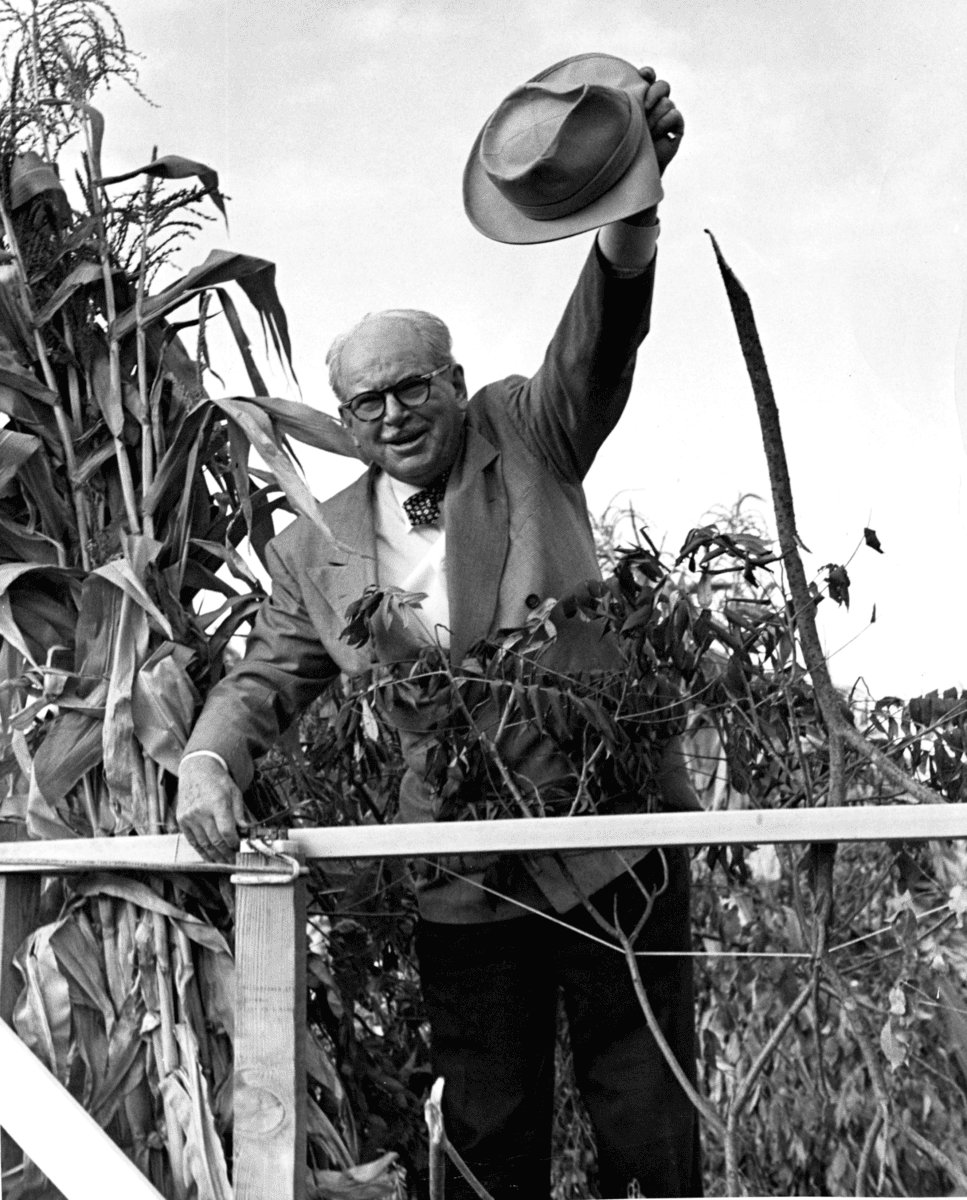
Photograph of Ding Darling in a cornfield, undated. Jay N. “Ding” Darling Papers [MsC0170], Special Collections and Archives.
Jay N. “Ding” Darling (1876–1962) was what many would consider a 20th-century Renaissance man: a political cartoonist, environmental conservationist, civil servant, scientist, artist, and celebrity.
He is best known as a two-time Pulitzer Prize winning cartoonist for The Des Moines Register, where he worked from the late 1900s through the late 1940s. His dry humor and unabashed honesty about political and cultural topics made him world-famous. Darling’s popularity helped him make many powerful friends like Presidents Theodore Roosevelt (in office 1901–1909) and Presidents Herbert Hoover (in office 1929–1933), prominent wildlife conservationist Aldo Leopold, and even fellow cartoonist Walt Disney.
Along with his fame from cartooning, Darling became one of the nation’s most influential figures in the American environmental conservation movement.
As a child, he became interested in trying to protect American wildlife, especially ducks. He grew up during the transition to industrial manufacturing, watching large factories and railroads expand across Iowa and the damaging toll they could take on local ecosystems.
To help reclaim some of the lost glory of Iowa’s wildlife, Darling threw himself into as many conservational causes as he could. This passion led him to be appointed director of the United States Bureau of Biological Survey (later part of what is now the U.S. Fish and Wildlife Service) by President Franklin D. Roosevelt. Darling made historic attempts to answer his growing concerns of industrialism’s impact on the environment. All his work culminated in a long-lasting conservation legacy that many still try to honor or follow today.