
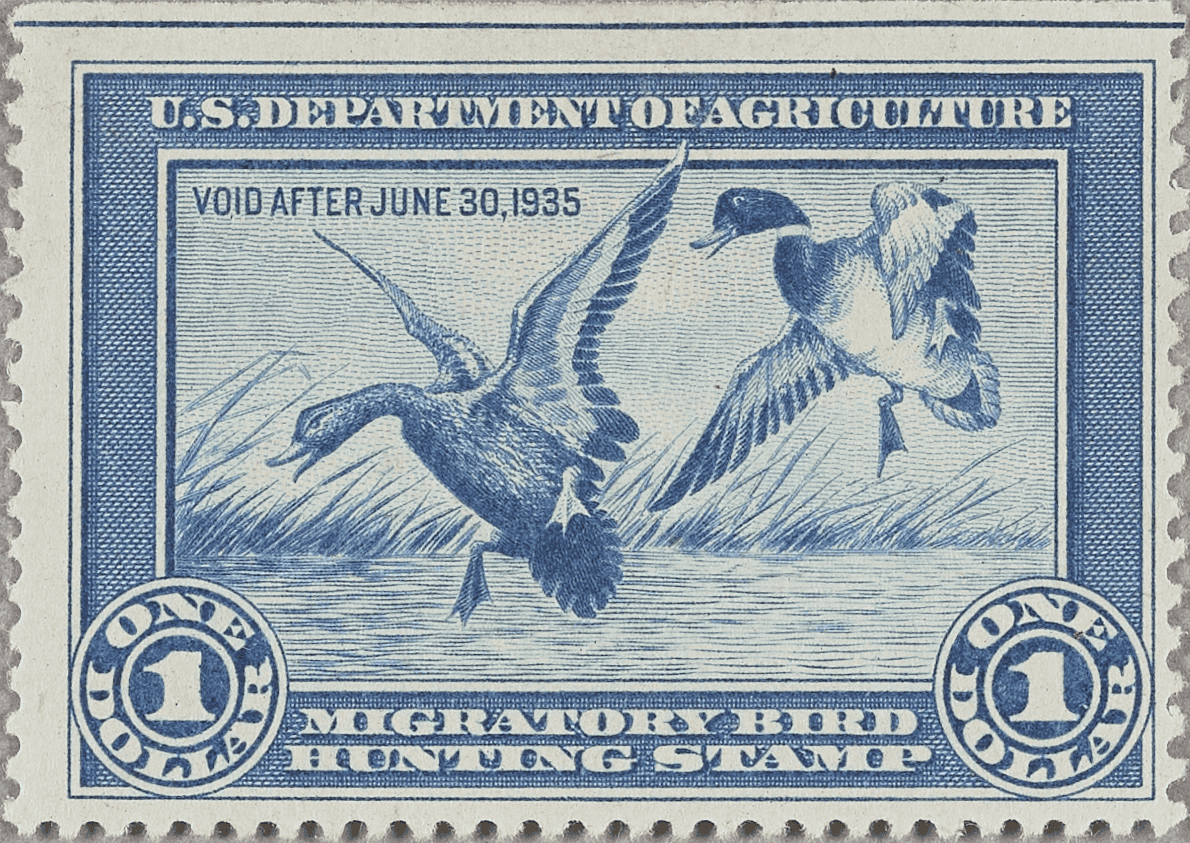
The first Federal Duck Stamp, 1934. Designed by Ding Darling. Jay N. “Ding” Darling Papers [MsC0170], Special Collections and Archives.
President Franklin D. Roosevelt created the President’s Committee on Wildlife Restoration (also known as the Duck Committee) in 1934 to assist in resolving the nationwide migratory waterfowl crisis. The committee was chaired by Tom Beck, editor of Collier’s magazine, and joined by Iowa-born scientist and nature writer Aldo Leopold and Ding Darling. With the increase of market hunting, and the demand for duck meat and feathers, waterfowl were at risk of extinction.
As a result of the special committee, Darling had the idea of a stamp that could be purchased by waterfowl hunters to raise funds for birds with dwindling population numbers.
The Migratory Bird Hunting and Conservation Stamp Act was enacted into law on March 16, 1934. This law required waterfowl hunters over the age of 16 to annually purchase a stamp, popularly known as the Federal Duck Stamp, to hunt waterfowl. The fees would go directly into the conservation of these birds and their habitats.

Darling purchasing the first Federal Duck Stamp ever sold, 1934. Jay N. “Ding” Darling Papers [MsC0170], Special Collections and Archives.