Equipment
Faculty and staff may request equipment using our reservation form. For more information, see our policies or contact us.
Software
Available online
Available at Hardin Library
- UMedic — Available on all Hardin public computers. The UMedic Multimedia Computer Curriculum is a patient-centered system that has been shown to enhance the learner’s bedside examination skills while also teaching patient histories, laboratory data and treatment.
- Essential Cardiac Auscultation — Essential Cardiac Auscultation is a computer-based program that uses interactive case based presentations along with graphic animations to teach the 12 most important findings (The Big 12) and their associated pathophysiology.
Physical Examination Models
Procedural Skill Models
Resuscitation Manikins
Anatomy Models
Other
Physical Examination Models
Harvey: The Cardiopulmonary Simulator
Current Curricular Uses at the University of Iowa:
- Foundations of Clinical Practice IV: Auscultation Sessions
- Cardiology Advanced Elective
- Internal Medicine Residency Program: Ambulatory Block Auscultation Sessions
Cardiovascular Exam Resources
|
Harvey is a life-sized mannequin created to help learners develop and improve their diagnostic skills in the field of cardiac care.
Harvey is equipped with a sophisticated combination of mechanical and computerized components, which provide the user with a realistic simulation of 27 cardiovascular conditions (two normal and 25 cardiovascular diseases). Harvey gives the user the opportunity to study various cardiac conditions and practice bedside examination techniques under realistic conditions without the difficulty of finding an appropriate group of available cardiology patients.
Disease States:
- Introductory Program
- Normal
- Innocent Murmur
- Acute Anterior Myocardial Infarction
- Acute Aortic Regurgitation
- Acute Inferior Myocardial Infarction
- Acute Mitral Regurgitation
- Acute Pericarditis
- Angina Pectoris
- Aortic Regurgitation
- Aortic Stenosis
- Aortic Valve Sclerosis
- Atrial Septal Defect
- Cardiomyopathy
- Chronic Mitral Regurgitation
- Coarctation of the Aorta
- Hypertension
- Hypertrophic Obstructive Cardiomyopathy
- Mitral Stenosis
- Mitral Stenosis and Regurgitation
- Mitral Valve Prolapse
- Patent Ductus Arteriosus
- Primary Pulmonary Hypertension
- Pulmonary Stenosis
- Tetralogy of Fallot
- Ventricular Aneurysm
- Ventricular Septal Defect
NOTE: To use Harvey for curricular purposes you must first participate in a training session. Contact the Hardin Library Simulation Center for more information.
Clinical Female Pelvic Trainer – Advanced
Current Curricular Uses at the University of Iowa:
|
The Clinical Female Pelvic Trainer presents accurate anatomical and tactile representation of the female pelvis for ‘hands on’ examination and diagnosis of pathologies and abnormalities. Interchangeable uterine assemblies simulate uterine fibroids, ovarian cysts and a retroverted uterus.Skills:
- Recognition of anatomy and appropriate landmarks
- Digital vaginal examination procedure
- Bi-manual examination
- Cervical smear procedure (including use of speculum)
|
Clinical Male Pelvic Trainer
Current Curricular Uses at the University of Iowa:
- Foundations of Clinical Practice IV: Specialty Physical Examination
|
This Male Pelvic Trainer presents key anatomical features, both externally and internally, for teaching ‘hands-on’ examination and diagnosis.The gonads, vas deferens and anus are all present and the trainer can be used in either the supine or left lateral position.Skills:
- Learning examination procedure
- Testicular examination
- Rectal examination of the prostate
|
Testicular Self-Exam Simulator
Current Curricular Uses at the University of Iowa:
- Foundations of Clinical Practice IV: Specialty Physical Examinations
|
Examination of the testicles is just as important as examination of the female breasts for early detection of tumors. Providing exceptional realism, this simulator features soft, thin outer skin with delicate underlying structures and four embedded, simulated tumors. Ideal for teaching proper palpation techniques.Skills:
- Testicular exam/self-exam
- Recognition of testicular masses
|
Rectal and Prostate Examination Trainer
Current Curricular Uses at the University of Iowa:
- Foundations of Clinical Practice III: Physical Exam Skills
- Foundations of Clinical Practice IV: Specialty Physical Examinations
- Urology Clerkship
|
A realistic representation of the buttocks, anus and rectum allowing for the practice of diagnostic skills associated with rectal examination. Features a palpable sacrum and realistic sphincter tone. Also includes five interchangeable prostates (normal, unilateral benign, bilateral benign, unilateral carcinoma and bilateral carcinoma) and two perineums (normal and polyp/carcinoma).Skills:
- Digital examination of prostate
- Digital rectal examination
- Proctoscope insertion and use
|
Examination & Diagnostic Breast Simulator
Current Curricular Uses at the University of Iowa:
- Foundations of Clinical Practice IV: Specialty Physical Examinations
- OB/GYN Clerkship
Breast Exam Resources
|
A life-size realistic breast used for training in examination procedure and diagnostic techniques.Skills:
- Recognized clinical breast examination technique
- Self examination technique
- Diagnosis of pathologies: carcinoma and fibroadenoma
- Cyst Aspiration (includes a variable volume benign cyst)
|
‘Strap-on’ Breasts Simulator w/Lumps & Bumps
Current Curricular Uses at the University of Iowa:
- Foundations of Clinical Practice IV: Specialty Physical Examinations
- OB/GYN Clerkship
Breast Exam Resources
|
This important model offers the opportunity of training for the examination of the breasts, axillae & clavicular regions and for the communication skills involved. The two part model features an easy-fit support vest which is worn by a fellow student or a mannequin and a soft tissue chest (including lower neck, clavicle and both axilla) which attaches to the vest. The breasts are of realistic weight with significant ptosis, and has normal nodes on one side and enlarged nodes on the other.The Lumps & Bumps provide a variety of pathological simulations. They can be placed in various positions between the soft tissue chest and the breast infills of the ‘Strap-on’ Breasts.Skills:
- Professional-to-patient communication (When worn by male trainees they can gain a greater empathy with female patients by experiencing breast examination)
- Recognized examination techniques
- Identification of anatomical landmarks and lymph nodes
- Diagnosis of pathologies (cyst, lipoma, fibroadenoma and carcinoma)
|
Eye Examination Simulator
Current Curricular Uses at the University of Iowa:
- Foundations of Clinical Practice II: Physical Exam Skills Sessions
- Ophthalmology Clerkship
- Physician Assistant Procedural Skill Session
HEENT Exam Resources
|
A sophisticated trainer (Eye Examination Simulator) for teaching and practicing the use of an ophthalmoscope, examining the ocular fundus, and learning and identifying diseases and conditions within the eye. The pupil diameter can be altered and reproduces a realistic visual axis and view of eyegrounds. Additional slides are provided by the UIHC Department of Ophthalmology.Disease States:
- normal eyeground
- hypertensive retinopathy: arteriolar vasoconstriction grade 3, arteriolosclerosis grade 1, haemorrhages and cotton wool spot, simple vein concealment
- simple/background diabetic retinopathy: microaneurysms, haemorrhages & hard exudates
- peripheral panretinal photocoagulation treatment for diabetic retinopathy
- papilloedema (chronic phase)
- papilloedema (acute phase)
- glaucomatous optic atrophy: glaucomatous optic disc cupping & nerve fibre bundle defect
- retinal vein occlusion (acute phase): flame-shaped haemorrhage & cotton wool spots
- retinal vein occlusion (after retinal laser photo-coagulation)
- toxoplasmosis: retinochoroiditis
- age-related macular degeneration: macular exudates & subretinal haemorrhage
- giant cell arteritis
- macular pucker
NOTE: There are five eye examination simulators available at the Hardin Library Simulation Center. |
Blood Pressure Cuffs and Stethoscopes
|
|

|
These blood pressure cuffs use mercury to measure blood pressure and fall into the 25.4 to 40.6 CM range.Skills:
- Measuring systolic and diastolic blood pressure.
|
Procedural Skill Models
Female Catheterization Simulator
Current Curricular Uses at the University of Iowa:
|
The Female Catherization Simulator
is constructed with a bladder reservoir, patient urethra, and a valve simulating the internal urethral sphincter. The normal feeling of resistance and pressure will be experienced as a catheter is passed through the urethra, past the sphincter, and into the bladder. When the catheter enters the bladder, artificial urine (water) will flow from the catheter as it would with a real patient. This simulator is the torso of a middle-aged woman with thighs abducted for proper position during catheterization. The external genitalia and perineum are molded in lifelike form.NOTE: There are two female catheterization simulators available at the Hardin Library Simulation Center. |
Fetal Monitoring and Labor Progress Model
|
This model set includes a fetal head, lower uterine segment, fetal buttocks for breech presentation, four interchangeable cervical dilatation models, and durable case. Also comes with lubricant, teaching suggestions, and carrying case.Skills:
- Performance of vaginal exams
- Assessment of labor progress and dilatation
- Palpation of fetal fontanels and suture lines
Assessment of the position of the fetal head |
Male Catheterization Mode Simulator
Current Curricular Uses at the University of Iowa:
|
With the Male Catheterization Simulator, catheterization can be practiced just as on a real patient. A lubricated catheter can be inserted in the urethral orifice, passed through the urethra, and into the bladder. When the bladder is successfully entered, artificial urine (water) will flow from the catheter. The student will feel the normal restrictions caused by the mucosal folds, bulbous urethra, and the internal urethral sphincter, just prior to entrance into the bladder.
The experience teaches proper positioning and movement of the penis to allow the catheter to pass easily with a minimum of discomfort to the patient.NOTE: There are two male catheterization simulators available at the Hardin Library Simulation Center. |
Adult Venipuncture and Injection Training Arm, Light and Dark-Skinned
Current Curricular Uses at the University of Iowa:
|
Venipuncture and Injection Training Arms are the ideal way to teach venipuncture and injection techniques including starting IVs and introducing Over the Needle IV catheters. These simulators end your problem of finding willing volunteers, and help avoid patient injury and liability while the students are learning new procedures. Realism begins with fine detail – right down to the fingerprints. But most important is the realistic feeling of puncture through the vinyl skin and latex veins. The skin actually rolls as you palpate the vein and the characteristic “pop” can be felt as the needle penetrates the vein. When IV is successfully started, artificial blood (water) will appear as flashback. Veins are accessible at the antecubital fossa, along the forearm, and at the back of the hand, making it possible to practice venipuncture at any of the common sites.NOTE: There are of three venipuncture and injection training arms available at the Hardin Library Simulation Center. |
Knot Tying Kits
Knot Tying/Suturing Resources
|
The Ethicon Knot Tying Practice Board enables learners to practice a variety of suturing and knot tying techniques that all applicable to all types of surgical procedures, including the square knot, surgeon’s (friction) knot, deep tie, ligation around a hemostatic clamp, instrument tie and granny knot.Kits Include:
- Knot Tying Board
- Instruction Manual
- Rope
- Scissors
- Tweezers
- Hemostat
NOTE: There are eleven knot tying kits available at the Hardin Library Simulation Center with a 3 Day Checkout. |
Knee for Aspiration
Current Curricular Uses at the University of Iowa:
- Inpatient Internal Medicine Clerkship
|
This specialized model is used for teaching and practicing the technique of synovial fluid aspiration.Skills:
- Patient posture and management
- Palpation techniques
- Identifying anatomical landmarks
- Aspirating synovial fluid from the knee joint from both lateral and medial aspects
Features:
- Precise anatomy with bony landmarks
- Realistic patella
- Discrete muscle and skin layers provide realistic tissue and needle response
- Synovial sac with fluid feed incorporates a one-way valve for recharging with aspirant
- Synovial sac is self sealing
|
Shoulder for Joint Injections
Current Curricular Uses at the University of Iowa:
- Inpatient Internal Medicine Clerkship
|
For practicing soft tissue joint injection used for the treatment of injuries and arthritis.Skills:
- Patient posture and management
- Palpation techniques
- Injection on 5 specific sites:
- subacromial space
- acromioclavicular joint
- bicipital groove
- glenoid fossa from the anterior aspect
- glenoid fossa from the posterior aspect
Features:
- Represents normal anatomy precisely (both superficially and subdermally) for palpation purposes
- Feedback Console illuminates green LED when needle is correctly placed in each of the injection sites
|
Hand & Wrist for Joint Injections
Current Curricular Uses at the University of Iowa:
- Inpatient Internal Medicine Clerkship
|
An articulated model of the hand and wrist used for practicing soft tissue joint injection for the treatment of injuries and arthritis.Skills:
- Patient posture and management
- Identifying anatomical landmarks
- Relevance of digital movement for presentation of injection sites
- Injection in 4 specific areas:
- carpal tunnel
- trigger finger – tendon sheath injection
- de Quervain’s sheath
- first metacarpal joint
- Precise placement of needle to avoid median nerve
Features:
- Articulated joints
- Simulates normal anatomical reference points for:
- carpal tunnel
- palmaris longus tendon
- distal wrist crease
- tendon to the flexor carpi radialis
- Feedback Console illuminates:
- green LED when needle is correctly placed in each of the injection sites
- yellow LED when metacarpal joint is entered
- red LED if the median nerve is hit
|
Intubation Model – AirSim Advanced
|
|

|
AirSim Advance features an anatomically accurate nasal passage, inflatable tongue to increase difficulty of airway and an option to include “breakout teeth” to stimulate the effects of bad practice in laryngoscopy. Regurgitation can also be simulated. This is a difficult or “resident level” model.Skills:
- Effective bag mask ventilation
- Use of full range of superglottic devices
- Video and standard laryngoscopy
- Trachael & naso-trachael intubation
- Awake fibreoptic examination
Current Curricular Uses at the University of Iowa:
- Emergency Medicine Clerkship
|
Intubation Model – AirSim Multi
|
|
|
|
The nasal passage has been developed in a manner similar to the main airway. This gives the same anatomical realism and functionality. Important landmarks such as the turbinates are clearly defined. In addition the material used offers the same tactile feedback which is delivered with the main airway itself. Skills:
- Naso–tracheal intubation
- Awake fibreoptic examination
- Bag & mask ventilation techniques
Current Curricular Uses at the University of Iowa:
- Emergency Medicine Clerkship
|
Resuscitation Manikins
CPR Prompt Adult/Child Training Manikin (Several)
 |
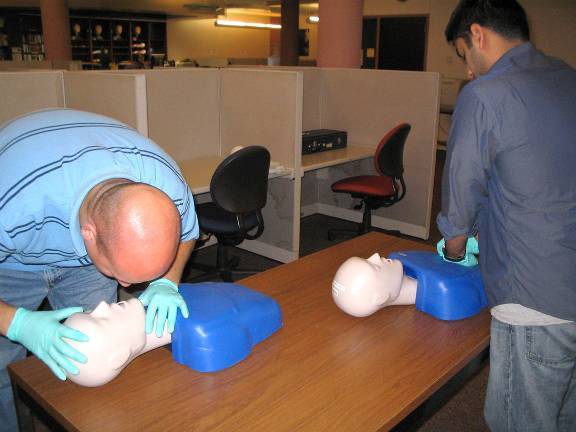
These manikins offer a number of specialized features, including an age selector dial that adjusts the compression depth required for adult or child CPR, a head tilt/chin lift to open the airway and a visible chest rise. An audible compression “clicker” verifies proper technique and anatomical landmarks (including rib cage notch markings, carotid arteries, shoulder blades, nipples and a navel marking) help guide learning.NOTE: There are three manikins available for individual checkouts as well as 4 large bags containing 5 manikins, each. |
Baby Anne Infant CPR Manikin (1)
 |
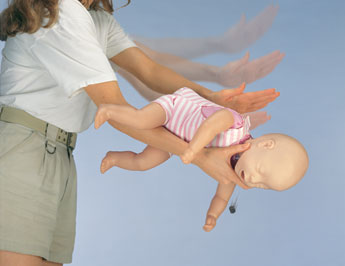
The Baby Anne manikin allows training on infant CPR. Features include oral and nasal passages allow realistic nose pinch, realistic airway function and natural obstruction of the airway, a head tilt/chin lift and jaw thrust, realistic chest compliance and a foreign-body airway obstruction allows practice of release of a foreign body. |
Baby Buddy Infant CPR Manikin (3)
 |
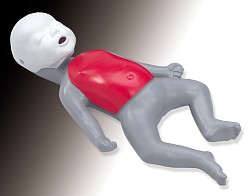
This lightweight, full-body infant manikin features proper landmarks to realistically practice CPR techniques. Includes a visible chest rise when ventilated. |
Anatomy Models
|
|
|

Current Curricular Uses at the University of Iowa:
|
Disarticulated bones are available for studying anatomy.Skills:
- Correct identification of the different bones in the human body.
|
|
|
Giant Functional Brain Model
|
 |
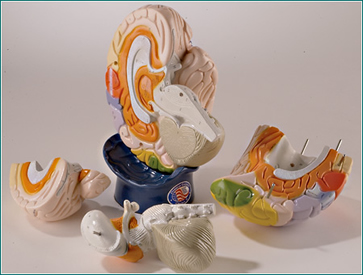
This brain model reproduces the brain of a right-handed person, employing contrasting colors and hand-lettered captions to locate and identify motor and sensory functional centers. The model highlights the emotional, sexual, memory and learning functions of the limbic system.Sensory regions and centers receptive to 20 specific body regions are distinguished, as are the motor centers controlling 19 body regions. More than 120 features, hand-numbered on the model, are identified in the corresponding key. |
|
|
Skeleton
|
|

Current Curricular Uses at the University of Iowa:
|
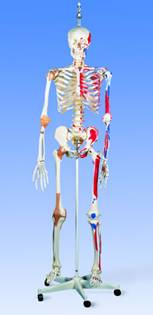
A complete life-size skeleton is available for use within the Simulation Center.Skills:
- Correct identification of the different bones in the human body.
|
Nystrom Sexless Human Torso with Removable Organs
|
|

|
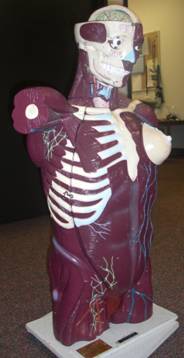
This life-size model contains 21 removable pieces including heart, lungs, spine, liver, kidney, intestines and brain. Although missing the manual, the model has over 700 labeled structures.Skills:
- Correct identification of the different muscles and organs in the human body.
|
Other
|
|
|

Current Curricular Uses at the University of Iowa:
|
These are Olympus light microscopes with 4, 10, 40 and 100 objective lenses. The slides are various histology specimens.Skills:
- Examining and interpreting slides.
|
|
|
|

Current Curricular Uses at the University of Iowa:
- Used for a study on the effects of the game Trauma Center: New Blood on clinical skills.
|
The library houses one Nintendo Wii along with two Wii Remotes and two Wii Nunchuks. The Wii is available by request. Please use the Equipment Request form in advance. |